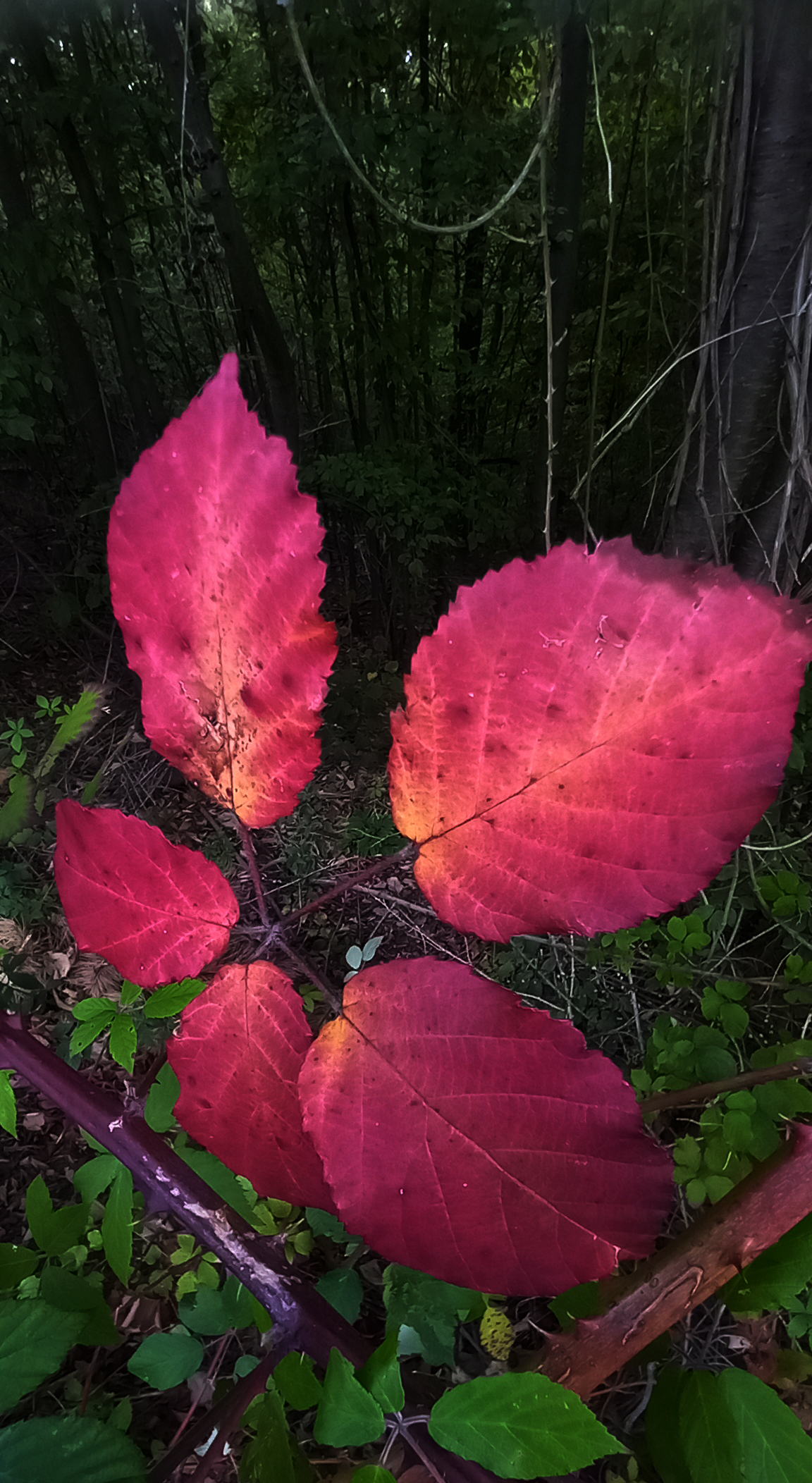
There is a particular beauty in autumn. Although we can see nature shedding its wonderful green coat we can witness the beauty of colours which announce death. Blackberry leaves which were a bright green now scream with yellow, red and orange. I wonder which version is more beautiful: the one in the summer or the one which is heading toward winter. And I think about this while I wait for my salmon to cook.

I am amazed of how I can have salmon from Norway, apples from Poland and a myriad of other foreign brought foods right on my plate in my country. I think that it has become such a norm to have these that we can often forget to appreciate them. I also think about my ancestors, who had a more simple style of living as they probably ate only their local food as commerce was not that well developed 200 years ago. Which is better? I don’t know. But I do love my salmon.

So between visiting my autumnal forest and munching on fish I think about writing. Writing about the beauty of impermanence. Can you remember that moment in your life when you really wanted something? Let’s think about your first car or bike. You wanted it so badly. You thought about it. As soon as you got it you have made all sorts of investments in it in order to make it look like yours. It was exciting. It was a new project that was entirely in your hands. But after a while the enthusiasm wore off. Soon enough you discovered that this object of desire became a source of problems. Cars get broken. So do bikes. And from once being a beloved metallic baby the thing you once wanted so much becomes a nuisance. If you could only throw it from your balcony or from your garage and spare yourself of the hassle! I am sure you wanted to just abandon that piece of scrap metal once the visits to the mechanic shop got really pricey. The heck with this car! Someone just get this bike from me, I am so done! Nothing is permanent. An object of desire can and will become something you will dread having at a certain point in life. I dare to say that in some situation this is the way people proceed handling other people as well: discard them or make their life a living hell if they can’t get rid of the relationship. We could say that this shows the flawed nasty human nature. I disagree and I would want to take a look to nature in order to gain a new perspective. Nature is always, after God, my greatest teacher.

There are no two leaves the same in a forest. No two summers alike. No rustling of the leaves will ever sound the same the next day. Things change quite rapidly in nature. Life and death are at every corner. Nobody takes it personally. It is just life. I believe that it is normal to get bored and actually it is pretty healthy. We would never progress if we would be happy all the time with the things we have done 10 years ago. We strive for more. We desire to see something shifting the scale year to year. The person who got the car five years ago might have changed (thanks God if he/she did). The way we imagined the car serving us might have changed. Our needs change. It is absolutely normal. One would dare to say now: oh this kind of view feeds the consumerist version, no wonder no one is happy because we always want more! Of course this would be right. Every perspective is valid. But how about being content with the space in the middle? This space is filled with being happy with what you have WHILE you pursue something different. Think of the oak tree in the autumn. Some leaves remain green while others start to fall. The tree is in the between of life. Never fully there in one particular moment. And yet….it is. And it stays. Why can’t we learn this from a tree and apply it to our lives? I think that the space in between the transitions is what gives us the quality of our lives. We can go through multiple ordeals during a lifetime. To be stuck on what has been, on what is or what will be would bring a lot of distress. To be hyper focused on changing the situation would add internal pressure. But having a vision while seeing the beauty and the lessons hidden like a gem behind the experience is wisdom being born.

So the salmon fillet that I am eating was once a happy fish. He was swimming in the beautiful waters of Norway until someone snatched it, cut it and packed it so it could get into my plate. A part of me could be very sad for this salmon or it could look at it as just life. Other salmons will be born. Some other people will snatch them. And other will eat them. And life goes on just as beautifully as it was before and after the event. That is the beauty of impermanence: the space which is in between.

ROMANIAN
Toamna are o frumusețe aparte. Deși vedem natura lepădându-se de minunata ei mantie verde, suntem martorii frumuseții culorilor care vestesc sfârșitul. Frunzele de mur, odinioară de un verde crud, acum „strigă” în nuanțe de galben, roșu și portocaliu. Mă întreb care variantă este mai frumoasă: cea din timpul verii sau cea care se îndreaptă spre iarnă. Și mă gândesc la toate acestea în timp ce aștept să se gătească somonul în tigaie. Mă uimește faptul că pot avea în farfurie, chiar aici la noi în țară, somon din Norvegia, mere din Polonia și o mulțime de alte alimente aduse de peste hotare. Cred că a devenit ceva atât de obișnuit, încât adesea uităm să le apreciem. Mă gândesc și la strămoșii mei, care duceau o viață mai simplă, hrănindu-se probabil doar cu produse locale, întrucât comerțul nu era atât de dezvoltat acum două secole. Ce e mai bine? Nu știu. Dar îmi place la nebunie somonul.
Așadar, între plimbările prin pădurea de toamnă și savurarea peștelui, mă gândesc să scriu. Să scriu despre frumusețea caracterului efemer al lucrurilor. Îți amintești momentul acela din viață când îți doreai ceva cu ardoare? Să ne gândim la prima ta mașină sau bicicletă. Ți-o doreai enorm. Te gândeai mereu la ea. Imediat ce ai obținut-o, ai investit suplimentar ca să-i dai o notă personală. Era palpitant. Era un proiect nou, care depindea în întregime de tine. Dar, după un timp, entuziasmul a pălit. Destul de repede, ai descoperit că obiectul dorinței tale devenise o sursă de probleme. Mașinile se strică. La fel și bicicletele. Și astfel, ceea ce odinioară era o „bijuterie pe roți” – un obiect iubit – devine o povară supărătoare. Ce bine ar fi să-l poți arunca pur și simplu de la balcon sau din garaj și să scapi de toate bătăile de cap! Sunt convinsă că ți-ai dorit să abandonezi grămada de fier vechi în momentul în care reparațiile la service au devenit extrem de costisitoare. „La naiba cu mașina asta!” sau „Să ia cineva bicicleta asta de la mine, m-am săturat!” Nimic nu durează veșnic. Un obiect râvnit poate deveni – și cu siguranță va deveni – ceva ce vei ajunge să privești cu groază la un moment dat în viață. Îndrăznesc să afirm că, în anumite situații, oamenii procedează la fel și în relațiile cu ceilalți: îi abandonează sau le transformă viața într-un adevărat iad, dacă nu pot scăpa din acea relație. S-ar putea spune că acest lucru reflectă natura umană viciată și plină de cruzime. Eu nu sunt de acord cu această viziune și aș vrea să privesc spre natură pentru a dobândi o nouă perspectivă. Natura este, după Dumnezeu, cel mai mare învățător al meu.
Nu există două frunze la fel într-o pădure. Nicio vară nu seamănă cu alta. Foșnetul frunzelor nu va suna niciodată la fel a doua zi. În natură, lucrurile se schimbă destul de rapid. Viața și moartea sunt prezente la tot pasul. Nimeni nu ia asta în nume de rău. Pur și simplu, așa e viața. Cred că e normal să te plictisești; ba chiar e destul de sănătos. Nu am mai evolua niciodată dacă am fi mereu mulțumiți de lucrurile pe care le-am făcut acum zece ani. Tindem spre mai mult. Ne dorim să vedem cum se schimbă lucrurile de la an la an. Persoana care și-a cumpărat mașina acum cinci ani s-ar putea să se fi schimbat (și slavă Domnului dacă s-a întâmplat asta). Modul în care ne imaginam că ne va servi acea mașină s-ar putea să se fi schimbat. Nevoile ni se schimbă. E absolut normal. Cineva ar putea spune acum: „Ei bine, o astfel de viziune alimentează consumerismul; nu e de mirare că nimeni nu e fericit, pentru că vrem mereu mai mult!” Și, desigur, ar avea dreptate. Orice perspectivă e validă. Dar ce-ar fi să ne mulțumim cu spațiul dintre cele două ipostaze? Acest spațiu înseamnă să fii fericit cu ceea ce ai, în timp ce urmărești ceva diferit. Gândește-te la stejar toamna. Unele frunze rămân verzi, în timp ce altele încep să cadă. Copacul se află într-o stare intermediară a vieții. Nu e niciodată pe deplin ancorat într-un singur moment anume. Și totuși… el există. Și rămâne acolo. De ce nu putem învăța asta de la un copac și să aplicăm lecția în propriile noastre vieți? Cred că tocmai spațiul dintre tranziții este cel care dă calitatea vieții noastre. Putem trece prin numeroase încercări de-a lungul vieții. Să rămâi blocat în trecut, în prezent sau în viitor îți poate provoca multă suferință. Să fii obsedat de schimbarea situației creează o presiune interioară. Însă a avea o viziune, în timp ce observi frumusețea și lecțiile ascunse – asemenea unei nestemate – în spatele experienței, iată cum se naște înțelepciunea.
Așadar, fileul de somon pe care îl mănânc a fost, cândva, un pește fericit. Înota în apele superbe ale Norvegiei până când cineva l-a prins, l-a tranșat și l-a ambalat pentru a ajunge în farfuria mea. Pentru mine e un deliciu, pentru altul e moartea în farfurie. O parte din mine ar putea fi foarte tristă pentru acest somon sau l-ar putea privi pur și simplu ca pe o parte a vieții. Se vor naște alți somoni. Unii oameni îi vor prinde. Iar alții îi vor mânca. Iar viața merge mai departe, la fel de frumos ca înainte și după acest eveniment. Aceasta este frumusețea impermanenței: spațiul dintre evenimente.