If there is anything that we should worry about more seriously than wars, poverty and overall social injustice it would be internet addiction. We are living in an age when screen time has become a norm for a lot of people : “on average Americans spend nearly 8 hours each day watching television or movies “ while “a Stanford study found that for every hour we spend on our computers, traditional face-to-face interaction time with people drops by nearly 30 minutes “. Soft skills, interpersonal skills are taking a major hit because the required practice to hone them is lacking. The young minds of children and adolescents are the most vulnerable to this pernicious soul devouring screen. Fewer people read for pleasure now than than ever before and the stimulation that we expose our minds to literally shapes our brain.
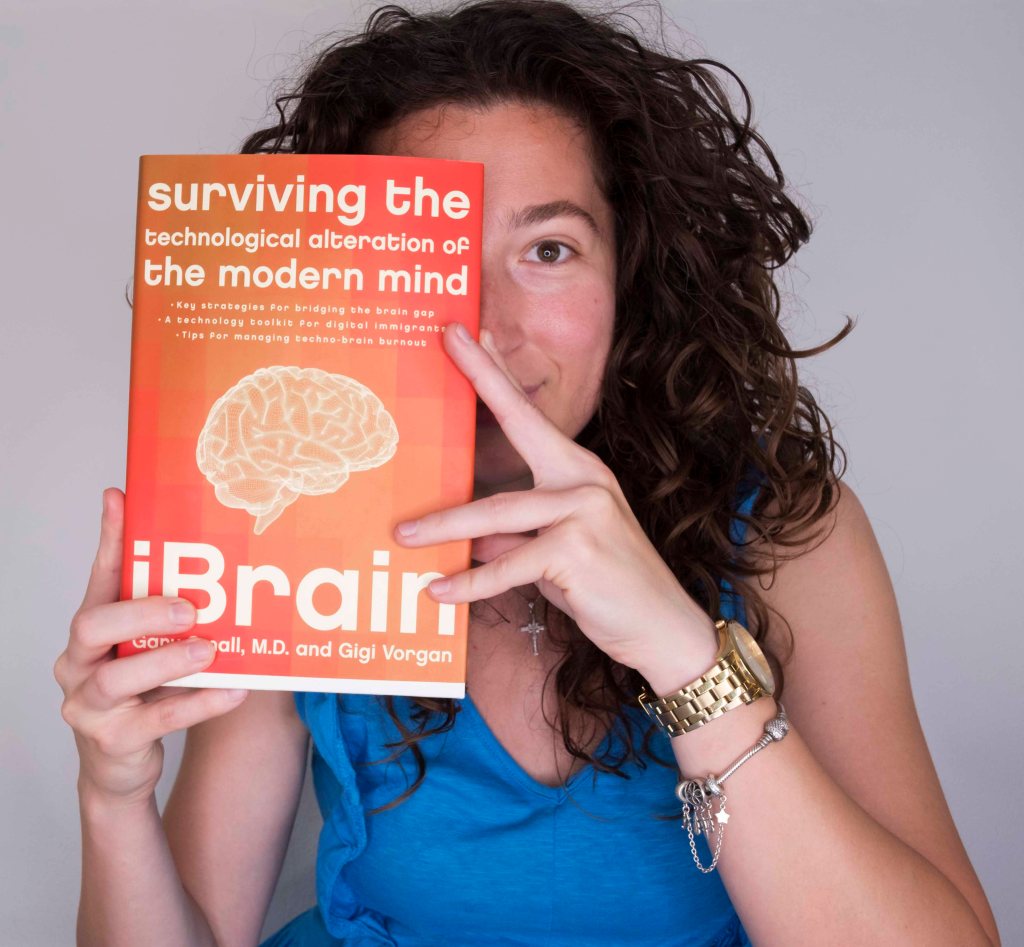
The book “Ibrain. Surviving the technological alteration of the modern mind” written by Gary Small and Gigi Vorgan raises a valid concern about the big chasm happening between generations now that they call the “brain gap”. The authors make a clear distinction between two categories:Digital Natives , those who were born into a world of computer technology {millennials (1981-2000) and generation X (1965-1980)} and Digital Immigrants, those who were introduced to computer technology as adults. Both generations would benefit more from technology if they would collaborate: the Natives could teach the Immigrants some very handy tech tricks while the Immigrants could help the Natives to explore and develop interpersonal skills.
Unfortunately the chasm is getting bigger and bigger as increased screen time makes it harder for people to know how to relate to each other in real life. Our attention span is influenced by the constant bombardment of information and the authors have coined the term of continuous partial attention in order to describe the habit of “keeping tabs on everything while never truly focusing on anything”.
Video games have become more popular among children and there is research showing that too early exposure to screens and video games can delay language development while “other research has shown that extensive video gaming makes kids more aggressive and desensitizes them to violence they see elsewhere.One study found that as little as ten minutes of daily violent video gaming could increase aggressive traits and behaviors”. In the pursuit of making more money to sustain the family, the parents are giving children screen time without realizing the harmful consequences on their offspring’s mental health. Our brain needs constant practice in order to form strong neural pathways for particular habits. If teenagers are spending more than eight hours per day online, their neural pathways for face-to-face communication are not growing and this leads to an impairment in normal mundane social interactions. Did we put such a high value on being tech savvy without realizing that we are cutting down from other valuable aspects in human development?
Early exposure to TV increases the odds of ADHD developing and this should come as no surprise as we have multiple examples of screens being used as surrogate nannies or for gaining some peace of mind and noise-free environment. But what is this doing to our children? We have internet addiction disorder developing as the addicts spend forty or more hours online in addition to online working time.
We need to get back to the roots of what makes us humans. Family time used to be a sacred and treasured moment when members gathered to share a meal together. Nowadays these are becoming quite rare as parents and children function on different schedules. But “research shows that traditional family meals have a positive impact on adolescent behaviour” therefore it makes to sense to order food and eat it separately while watching TV. I feel that screen have managed to separate humans from each other at a fundamental level: we can feel utterly alone while each of us is holding their phones in the presence of each other. Shared solitude in the false appearance of being together might be a new epidemic in the current society of 2024. The authors mention an interesting study showing that when it rains more kids watch TV and there is a correlation between the “high rates of autism in periods with higher precipitations when there was cable TV IN the household “. So the rise in autism, depression and ADHD is directly linked to our increased exposure to the screens.
What can we do in order to revert the consequences of daily overexposure to screens? Acording to the authors we can try to “take frequent breaks because it helps to maintain our attention” and avoid multitasking because “the brain can be less efficient when attention constantly shifts from one task to another” . We can also rely on mental aerobics and activities such as puzzles, crosswords, simple mathematics as “studies suggest that working out our neurons through mental puzzles and games can strenghten them and may even stave off age-related diseases such as Alzheimer’s” .
We must remember that the art of genuine conversation requires skill, focus and attention. The intensive screen time is depriving young minds from developing such a priceless trait. In a society where everybody is screaming for attention and everybody wants to be heard and understood we need good listeners. And , as authors have beautifully mentioned, “good listeners have self -control, not just over allowing their mind to wander, but also over interrupting”




Leave a comment