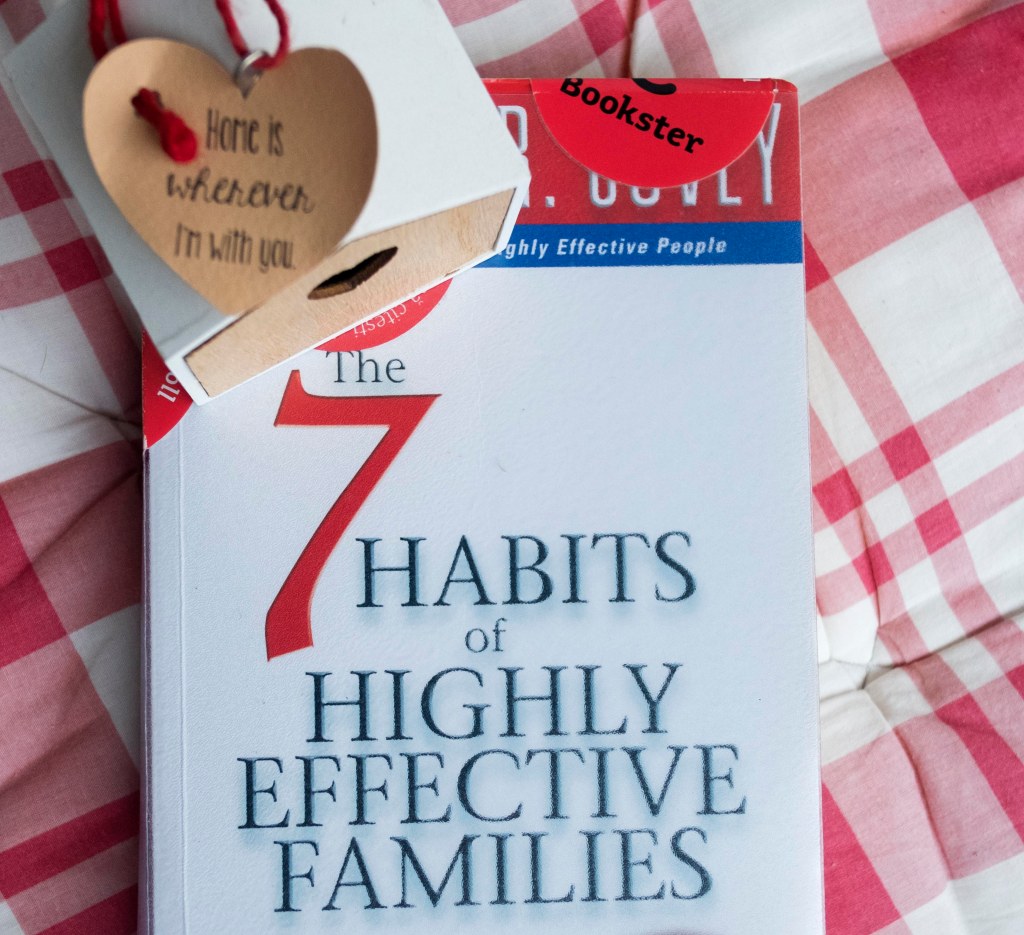
“Family is the most important, fundamental organization in the world”(Stephen Covey)
I think that we can all agree that we are living under difficult times. The world is more divided than ever, people are getting lonelier as gadgets multiply and thriving loving relationships seem to be on the brink of extinction. As Sandra Covey mentioned in the introduction of her husband’s book “society doesn’t support families as it used to. Life is more technological, faster, more sophisticated, scarier”
Stephen R. Covey talks about family in his bestselling book “The 7 habits of effective families. Building a beautiful family culture in a turbulent world”. I see this book as an attempt to restore the power of this important structure which is the pillar of society. The author mentions the vital role that it plays in our lives, stating that “I firmly believe that family is the building block of society and that our greatest fulfillment lies there”

We need a nurturing environment in order to improve our relationships with the loved ones. Marriage needs to be all about interdependence and our time has to be carefully disconnected from the pervasive presence of gadgets. A staggering number of children spend endless hours in front of screen, “the average child spends 7 hours a day watching television – and five minutes a day with Dad”
The first habit is about being proactive. This is all about becoming self-aware and accepting the fact that our own perspective can be flawed. This is maybe the most important habit that opens the door towards the other six because we can’t do anything unless we are willing to open our own mental horizons. Habit one is about “the ability to act based on principles and values rather than reacting based on emotion or circumstance” More people are beginning to become familiar with the concept of interegenerational trauma and Stephen mentions the amazing gift of becoming a “transition person” by “stopping the transmission of tendencies from one generation to another” There are moments in life when we act and talk just like one of our parents. It takes a lot of inner work to realize this and to be able to change the patters deeply ingrained in our being. Stephen mentions about the circle of influence and the circle of concern: we need to focus on what we can control so the circle of influence could grow. When our attention is on the circle of concern we will blame and accuse the others. Being proactive is all about taking ownership of our own behaviours and there are a couple of advices that could help us in the path toward mastering this first habit: “ask yourself , are those around you made happier or bitter by your presence in the home?” , “always talk about others as if they were present” , “be a light, not a judge; a model, not a critic”

The second habit is about beginning with the end in mind. Writing a family statement together with all of the members of the family can be a very powerful activity that can bolster the emotional connection. Keep in mind that “when you raise your children, you’re also raising your grandchildren. Patterns tend to persist”
The third habit prioritizes family time. You need to put family first. “The place to start is not with the assumption that work is non-negotiable, it’s with the assumption that family is non-negotiable” Try to keep a family calendar where each week you write where the family members are and their plans. Limit the amount of time that you spend watching Tv and choose instead activities that help you build a stronger relationship with your family members. The dangers of not doing this are serious and real:”if we don’t build better homes, we’ll have to build more prisons because surrogate parenting will nurture gangs” Adults tend to forget that children need more than food and shelter. Children need love and time and numerous studies have shown that “emotionally starved children will turn into angry adults, plowing through life for love, respect and things” Setting time on a weekly basis for your family is mandatory as family is all about providing adequate leadership. Stephen raises awareness around the topic of family time by adressing this pivotal question: ”Who’s going to raise my children – today’s alarmingly destructive culture or me?”

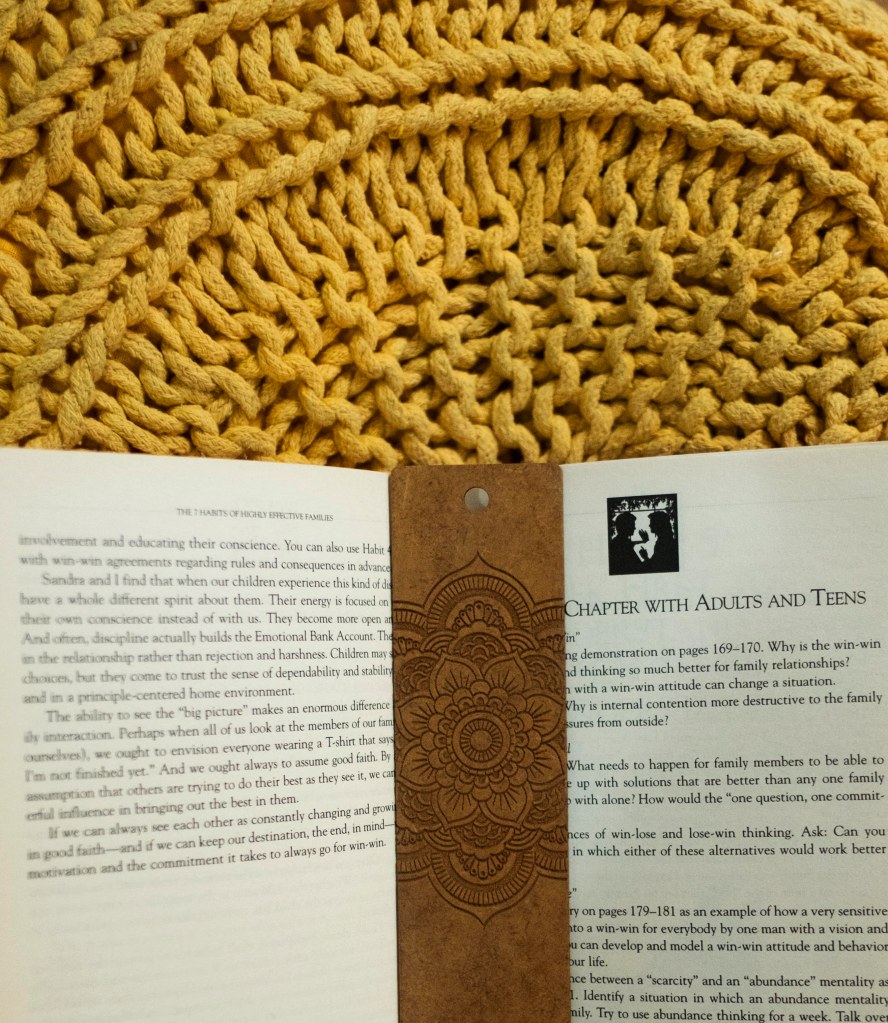
The forth habit addresses the hypercompetitive nature of our society. We need to think win-win and today’s society is all about competition and winning. We see this in job openings, television games and forced ranking systems. A lot of parents feel like they have to win in their interactions with their children and they resort to all sorts of tricks, from manipulation to coercion. But we need to realize that “it’s a loss for both child and parent when the relationship is based on manipulation and popularity rather than trust” It is very beneficial to let kids win in the little things, to give them a feeling of agency in their own lives.
The fifth habit is about understanding. Stephen Covey advises us to seek first to understand and then to be understood. There is an important detail that we have to keep in mind when it comes to this: ”people don’t see the world as it is; they see it as they are – or as they have been conditioned to be” In order to build a strong family we need real understanding and this can happen only in the absence of judgement. “The deepest hunger of the human heart is to be understood” and our children need this from us. Manipulation, belittling, coercion or pure force are tactics that can work on short term but which are most likely to fireback later. Mealtimes are a valuable oportunity to have a wonderful time together. During mealtimes we should never judge, discipline or correct. We should just enjoy them and share pleasant conversations and ideas. It is of paramount importance to appreciate people for what they have done, whether it meets your standards or not. When we want our child to perform a certain task in our family , Stephen Covey advises us to always ask ourselves these three questions:
“Should the child do it? (a value question)”
“ Can the child do it ?(a competence question)”
“ Does the child want to do it ? (a motivation question)”

The sixth habit is about synergy. “Synergy is the summum bonum – the supreme or highest fruit – of all habits” , “ it deals with the part between parts. In the family this part is the quality and nature of the relationship between people” Make time to be vulnerable. Be humble and treat every member with respect. Exclude TV from family time as much as you can as it is very detrimental for the quality of your interactions. Avoid criticizing, complaining, comparing and competing. Family should be about team work and win- win, not about winning for one’s own ego.
The last habit is about “sharpening the saw”. Habit number seven advises us to make the time to renew our family in four key areas: physical, social, mental and spiritual. The essence of family renewal is tradition. Organizing activities that make people bond together, knowing that in a particular day we will go to our favourite spot is an excellent method to build these long lasting traditions. We have to keep in mind everyday that “it takes tremendous personal and also family courage today to create an encouraging and nurturing home environment in the midst of the wider, discouraging environment of society” Stephen Covey’s book is a must have tool for every parent that wants to protect and nurture the most essential thing in the whole world: the family.



Leave a comment